El Desgaste de Cadera que Detiene tu Vida
The Hip Wear and Tear That Stops Your Life

Let me be direct: if you are reading this, you probably already know that something is not right with your hip.
The pain when getting up, morning stiffness, and that deep ache in the groin that forces you to limp are not just 'signs of aging'. They are clear signals your body is sending, indicating that the cartilage in your hip is running out. This condition is medically called coxarthrosis, or simply, hip wear and tear.
I am Dr. Raúl López Solis, a specialist in joint surgery and preservation. My goal is not only to relieve your pain, but to give you back the quality of life you deserve. However, we cannot ignore the problem. Hip wear and tear is progressive. Every day you postpone an evaluation, the joint suffers more damage. Therefore, we need to understand what is happening and act with urgency and precision.
What is hip wear and tear?
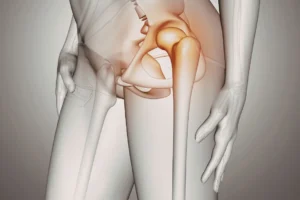
The hip functions as a ball and a socket (the acetabulum). Both bony surfaces are covered by a smooth, white, and slippery tissue: the articular cartilage. This cartilage is essential. It acts as nature's most perfect shock absorber, allowing the femur to rotate smoothly within the pelvis, without friction.
Hip wear and tear occurs when this cartilage wears down, thins, and erodes. Imagine that the cartilage is the Teflon coating of a pan. When the Teflon falls off, food sticks and the metal scrapes. Similarly, when the cartilage disappears, the bone begins to clash and rub directly against the other bone.
This constant friction not only causes unbearable pain, but also triggers the formation of small bony growths around the joint, known as 'osteophytes' or 'bone spurs'. These osteophytes further limit movement and increase stiffness. It is crucial that you understand that cartilage has no capacity for regeneration. Once lost, the damage is permanent, and only a professional intervention can stop the cycle of pain.
How does hip wear and tear feel: Key symptoms you should not ignore
Many patients believe that hip pain is felt in the side or the buttock. While it can radiate, the most characteristic and alarming symptom of hip wear and tear is groin pain. Pay close attention to the location and the moment the pain appears.
Groin and buttock pain
The pain from hip wear and tear is generally located in the front of the thigh, exactly where the leg meets the trunk (the groin). Initially, you may feel it only after intense activity, such as running or walking a lot. However, as the wear progresses, the pain becomes constant and appears even with simple daily activities.
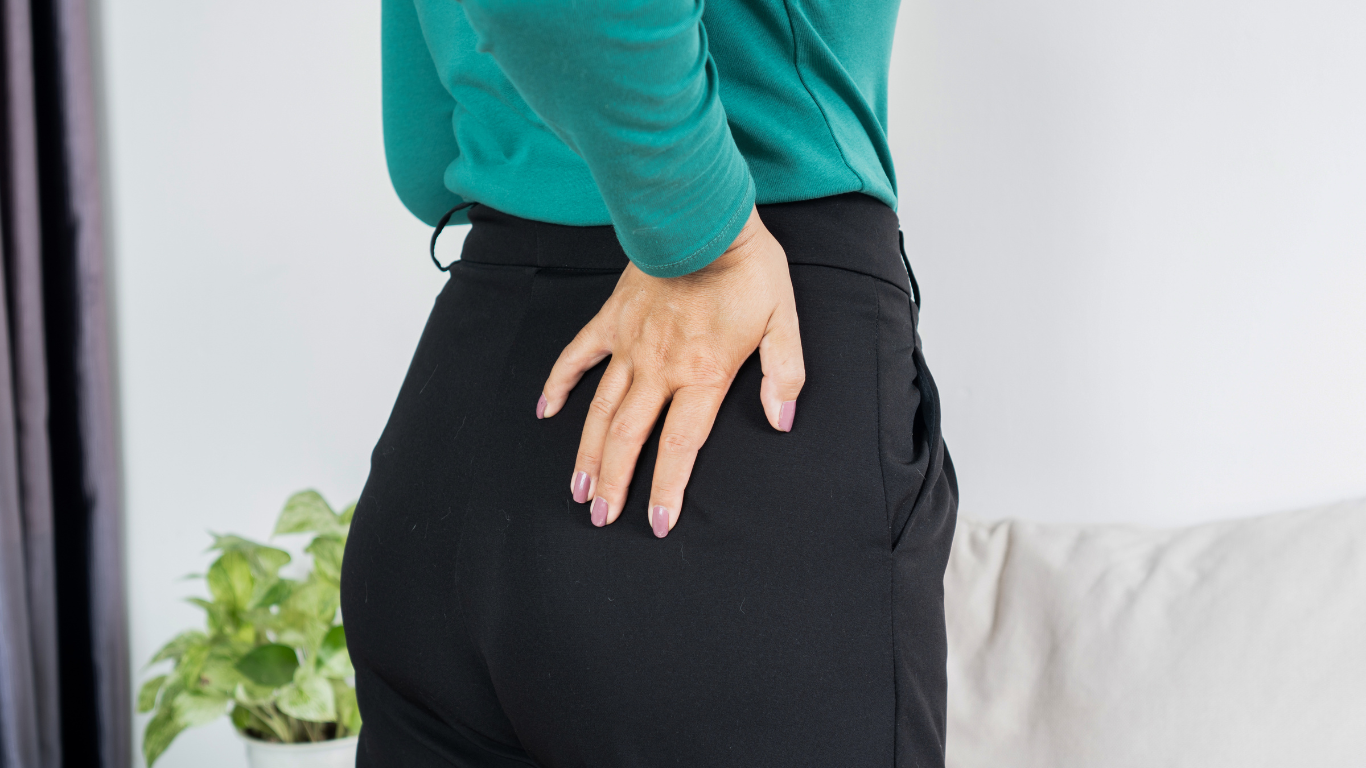
Additionally, it is common for the pain to radiate. You may feel discomfort in the knee, which sometimes confuses the initial diagnosis, or a dull, deep pain in the buttock. The key factor is that the pain worsens with load, that is, when standing or walking, and improves, even if only temporarily, with rest.
Stiffness and limited movement
Do you have trouble putting on your socks or cutting your toenails? Limited movement is an unmistakable sign that your hip is stiff. This stiffness is particularly noticeable in the morning or after sitting for a long time (for example, when getting out of the car or a movie theater).
The loss of internal rotation is one of the first functional signs we detect in the consultation. Simply put, the joint no longer has the space or the smooth surface to move freely. Therefore, basic activities such as turning or climbing stairs become torturous.
Limping or abnormal gait
Limping, known medically as an antalgic gait, is the body's natural response to avoid pain. Unconsciously, you try to spend as little time as possible bearing weight on the affected hip. This changes your walking pattern and, in the long term, can generate secondary problems in the knee or spine due to constant compensation. Therefore, hip wear and tear does not only affect the hip, but your entire musculoskeletal system.
The true causes: why your hip wears out
It is easy to blame age or being overweight, but the truth is that most cases of hip wear and tear have a mechanical basis. The wear occurs because the joint has not been functioning efficiently from the start. Think of a car with a slightly misaligned tire; the wear will be premature and uneven. In the hip, the same thing happens.
Structural problems from birth
These are the most important factors in the early onset of hip wear and tear. Often, the problem starts decades before you feel pain. For example, Hip Dysplasia. In this condition, the acetabulum (the socket) is too shallow or poorly oriented, which causes the femoral head not to be covered correctly. This concentrates pressure on a small area of the cartilage, leading to premature collapse.
Another critical factor is Femoroacetabular Impingement (FAI). Here, there is excess bone on the femoral neck (CAM type) or on the rim of the acetabulum (PINCER type), causing an abnormal clash during movement. This constant clash damages the cartilage in a specific way. If not corrected in time, FAI is a direct cause of coxarthrosis in young adults.
Consequences of trauma and fractures
Any injury that alters the perfect anatomy of the joint can accelerate wear. A hip or acetabular fracture, for example, even if repaired correctly, can leave irregularities on the articular surface. Additionally, injuries that compromise blood flow to the femoral head (such as avascular necrosiskill the underlying bone, causing the cartilage to sink and be destroyed rapidly. Therefore, a history of trauma is a major risk factor.
General factors
Although they are not the primary cause, these factors accelerate the damage. Advanced age decreases the body's repair capacity. Being overweight exponentially increases the load on the joint, multiplying the impact force when walking. Furthermore, systemic inflammatory diseases, like rheumatoid arthritis, directly attack the cartilage and the synovial membrane, causing rapid and bilateral destruction. It is crucial to control these factors to slow the progression of the wear.
The diagnostic process for hip wear and tear: what are we looking for?
The diagnosis of hip wear and tear is a logical and precise process. When you arrive at my consultation, I not only listen to your account of the pain, but I perform an exhaustive physical exam to measure your range of motion, identify the exact location of the pain and evaluate your gait.
However, the key to diagnosis is imaging. The simple X-ray is our primary tool. A weight-bearing hip X-ray (that is, taken standing up) reveals three crucial signs of wear: 1) Decreased joint space (the cartilage has been lost), 2) The presence of osteophytes ('bone spurs'), and 3) Subchondral sclerosis (the bone becomes denser and whiter under the friction area).
Additionally, the X-ray allows us to classify the grade of the disease, which is fundamental for deciding the treatment. In some cases, if we suspect avascular necrosis, subtle impingement, or soft tissue damage (like the labrum), we may request a magnetic resonance imaging (MRI). However, the X-ray is sufficient to confirm advanced coxarthrosis. It is a visual diagnosis, not a guessing game.
Real solutions: treatments for hip wear and tear
The goal of treatment is clear: relieve pain and restore function. The choice of path depends on the degree of wear and your current quality of life. If the pain prevents you from sleeping or performing your job, the time for conservative treatments may have ended. Therefore, we must evaluate the options objectively.
Conservative management
Conservative treatment is reserved for the initial or moderate stages of hip wear and tear, when the joint space has not yet been completely lost. This includes:
- Activity modification: Avoid high-impact sports (running, jumping) and substitute them with swimming or cycling, which are low-impact.
- Physical therapy: It is vital for strengthening the muscles around the hip, especially the glutes. A strong muscle can compensate for part of the joint's instability.
- Medications and supplements: Non-steroidal anti-inflammatory drugs (NSAIDs) help control pain during crises. Supplements (glucosamine, chondroitin) have a limited effect, but can offer support in early stages. They do not cure the wear, they only offer palliatives.
Injections, especially with hyaluronic acid or platelet-rich plasma (PRP), can offer temporary relief, but do not reverse structural damage. If the wear is severe, these methods only delay the inevitable.
Advanced surgical options
When the pain is constant, movement is severely limited and the X-ray shows advanced wear, the definitive solution is surgical. There is no need to fear modern surgery; it is the most effective way to get your life back.
Preservation surgery
If you are a young patient (under 40 years old) and the cause of your wear is a correctable structural problem (such as Femoroacetabular Impingement), we can consider hip arthroscopy to clean the joint and correct the shape of the bone. This is not for advanced wear, but to prevent mild or moderate wear
Total hip replacement (arthroplasty)
This is the Gold Standard solution for advanced hip wear and tear. Total hip arthroplasty involves removing the damaged surfaces (the femoral head and the eroded acetabulum) and replacing them with high-tech artificial implants (prostheses), generally made of titanium and ultra-high molecular weight polyethylene.
In my practice, we use minimally invasive surgical techniques. This means smaller incisions, less muscle damage and, crucially, a faster recovery. The goal is that, within a few weeks, you can walk without pain and resume your activities. The durability of modern prostheses is excellent, exceeding two decades in most cases. Do not resign yourself to living with pain; replacement surgery offers you a new opportunity for mobility.
Your moment for decision is now
Hip wear and tear is a disease that gradually robs you of your autonomy. Every painful step is a reminder of what you have lost. However, as your hip specialistI assure you that effective and permanent solutions exist.
Do not wait until the pain is unbearable and the joint is completely destroyed. The earlier we address the problem, the more treatment options we will have, and the better your long-term result will be. If you identify these symptoms, if groin pain wakes you up at night or limits your work, it is time to act.
Schedule an evaluation appointment today. Let me examine your hip, define the exact cause of your wear and design a personalized treatment plan that gives you back your freedom of movement. Your quality of life does not have to be on pause. Contact me and let's take the first step toward a life without pain

Dr. Raul Lopez Solis
Hip & Knee Surgeon
Professional License: 926463 / Health Ministry Registry (SSA - Mexico): 2204 / Specialty License No.: AESSA-27436
Facebook: Dr Raul López Orhtopedic Surgeon
Instagram: drraullopezs
TikTok: @drraullopezs
Web site: About me
Related posts