Entendiendo la Coxartrosis: Por qué duele tu cadera y cómo detener el desgaste

Understanding Hip Osteoarthritis: Why Your Hip Hurts and How to Stop Joint Wear

Walking, sitting down, or simply tying your shoes are actions we often take for granted. However, when your hip starts to fail, these simple tasks become painful challenges. If you have noticed a progressive decline in your mobility, you might be dealing with Hip Osteoarthritis.
Often, patients come to the clinic thinking the pain is "normal for their age" or just a simple muscle strain. The reality, however, is that hip joint wear is a progressive medical condition that requires expert attention. It is not just about enduring the pain, but understanding that the joint is undergoing a structural change that limits your freedom.
In this article, we will thoroughly explore this condition, debunk the myths surrounding its causes, and, most importantly, show you that effective solutions exist to stop living with pain.
What Exactly is Hip Osteoarthritis and How Does It Develop?
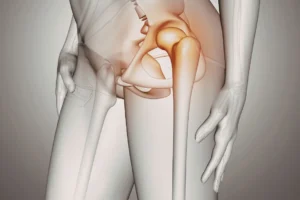
The hip is one of the largest and strongest joints in the body, designed to support our weight and allow a wide range of motion. It functions as a ball (femoral head) within a socket (acetabulum), both covered by a smooth, slippery tissue called articular cartilage.
The Hip Osteoarthritis is, simply put, the chronic and progressive wear and tear of this cartilage. Imagine a car's tires losing their tread; similarly, when the cartilage thins and disappears, the bone is left exposed. This causes the bones to rub directly against each other (bone-on-bone friction), generating inflammation, deformity, and the characteristic pain that prevents you from moving freely.
It is vital to understand that this process does not stop on its own. Without intervention, the friction continues to deteriorate the joint, leading to stiffness that can result in severe functional disability.
Warning Symptoms: How to distinguish the pain?
Pain is the primary symptom, but how it presents tells us a lot about the stage of the disease. Unlike muscle pain that improves with a few days of rest, joint wear pain has specific patterns:
Location and Type of Pain
Many patients are surprised to learn that true hip pain is not always felt on the side of the leg. Typically, the pain is located in the groinand can radiate to the front of the thigh or even down to the knee. It is mechanical pain, meaning it worsens with movement and activity, and usually improves (initially) with rest.
Morning Stiffness and "The Shoe Sign"
Do you struggle to put on your socks or clip your toenails? This loss of flexibility is one of the earliest warning signs. Many patients report stiffness upon getting out of bed or after sitting for a long time, feeling like they need to "warm up" the joint before they can walk properly.
Limping and Loss of Strength
Over time, to avoid pain, the body compensates by altering the way you walk. This produces a visible limp (antalgic gait) and, as a very serious secondary consequence, the gluteal and leg muscles begin to atrophy (lose strength and mass) due to the lack of proper use.
Causes of Hip Joint Wear: Why Me?
Although age is a factor, Hip Osteoarthritis is not exclusive to older adults. There are two main types that help us understand the root of the problem:
Primary Hip Osteoarthritis
This occurs due to the natural aging of the joint and genetic factors. The cartilage simply completes its natural lifespan. It usually appears after the age of 60.
Secondary Hip Osteoarthritis (Resulting from other conditions)
This point is crucial and often overlooked. Joint wear frequently appears in younger people (in their 40s or 50s) due to previous issues that altered hip mechanics. Among the most common causes we see in the clinic are:
- Acetabular Dysplasia: A congenital malformation where the hip did not form correctly, causing accelerated wear decades later.
- emoroacetabular Impingement (Cam or Pincer Lesions): When the shape of the bones is imperfect and they clash during movement, destroying the cartilage and labrum prematurely.
- Post-traumatic conditions: Old acetabular or femoral fractures that left the joint surface irregular.
- Avascular Necrosis: As mentioned in other articles, bone death leads to collapse and subsequently to severe osteoarthritis.
Diagnosis: Visual Confirmation of the Damage
To confirm Hip Osteoarthritismedical history is fundamental, but an X-ray is the initial gold standard test. We look for unmistakable signs on the X-ray:
- Joint Space Narrowing: The space between the bones disappears (a sign that cartilage is gone).
- Osteophytes (Bone Spurs): The body, in a desperate attempt to stabilize the joint, creates "bone spurs" around the hip.
- Subchondral Cysts: Small holes in the bone caused by excessive pressure.
An accurate diagnosis allows us to classify the degree of wear and determine the ideal treatment. Treating a hip with mild wear is very different from treating one that is already stiff and locked.
Treatments for Hip Osteoarthritis: Reclaiming Your Life
This is where a sense of urgency and hope comes in. Many patients delay their doctor's visit out of fear of surgery, condemning themselves to live in pain. But modern medicine offers a wide range of options.
Surgical Treatment (The Definitive Solution)
When joint wear is advanced, the pain is constant (even while sleeping), and stiffness limits your life, surgery is not a "last resort" to be feared, but a doorway to a second youth.
The Total Hip Replacement (Prótesis) is one of the most successful surgeries in modern medicine. It involves replacing the damaged surfaces with biocompatible implants that replicate natural movement. Thanks to minimally invasive techniques, recovery is much faster than people realize, allowing patients to walk pain-free, often on the same day as the surgery.
The Cost of Waiting
The Hip Osteoarthritis is an unforgiving disease over time. Waiting for "the pain to go away on its own" or abusing painkillers only allows muscle atrophy to advance, making any future recovery much more difficult.
Living with hip pain is neither normal nor necessary. You have the right to enjoy your walks, your travels, and your daily life without that constant stab in your groin. Technology and medical expertise are on your side to restore the movement you thought was lost.
Is Hip Pain Limiting Your Daily Life?
If you relate to the stiffness, the difficulty putting on your shoes, or the groin pain, it is time to take action. An early diagnosis can make the difference between a restricted life and an active one.
Reclaim your freedom of movement.
Schedule a virtual consultation today, and let's evaluate your hip to design the ideal treatment plan for you.

Dr. Raul Lopez Solis
Hip & Knee Surgeon
Professional License: 926463 / Health Ministry Registry (SSA - Mexico): 2204 / Specialty License No.: AESSA-27436
Facebook: Dr Raul López Orhtopedic Surgeon
Instagram: drraullopezs
TikTok: @drraullopezs
Web site: About me
Related posts